
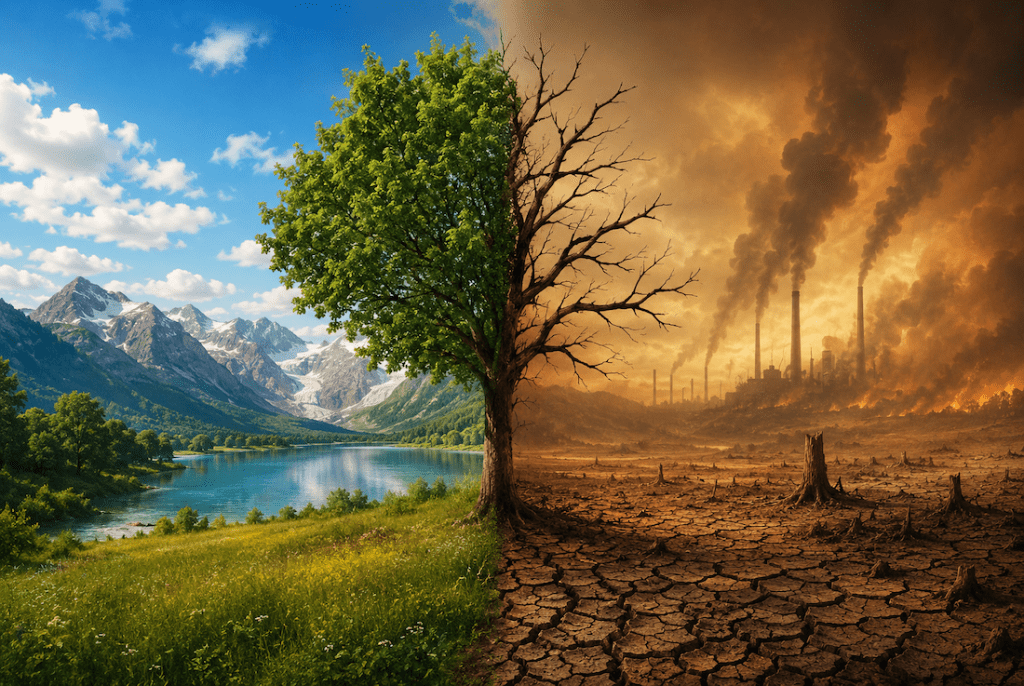
We can all agree it is hot; we are talking about little else. Rain, remember that? It might seem pleasant for now, but it is hard not to see a disaster bellowing towards us. Many parts of Europe are on fire, and there has been a spate of large fires across the UK. My own son was trapped in a car in the New Forest as the fires raged a few hundred yards from his vehicle.
In Europe, the fires have ripped through forests, scrubland, pasture and farmland, with several reaching urban areas in several countries, including France, Spain and Greece.
Simone Varotto, Professor of Finance at Henley Business School, recently said, “The UK should treat southern Europe as an early warning. This summer’s heatwaves and wildfires in southern England, which have already burnt more than 20,000 hectares, show that fire risk is no longer confined to the Mediterranean.”
If we assume this is correct, then what can we do to mitigate this crisis, which is already within our borders? And how much is it going to cost? How can we afford it?
Well, for more than forty years, neoliberal economics has rested on a simple proposition: governments must find money before they can spend it. Public investment has been constrained by taxation, borrowing and fiscal rules, while the creation of most new money has been left to commercial banks issuing loans.
Climate change is likely to bring that settlement to an end.
As the environmental crisis intensifies, governments will face demands for levels of investment that private finance cannot, or will not, deliver. Decarbonising energy systems, rebuilding infrastructure, adapting cities, restoring ecosystems and responding to increasingly frequent climate disasters will require spending on a scale that debt-based private finance is poorly equipped to provide.
Burning through money burning up rockets failing to get to Mars, or negligently pumping money into AI, which ‘could’ solve the climate change issue, but in the meantime the energy demands of AI data centres escalates the very problem it ‘might’ solve. Perhaps taking over the human race and using us a cheap energy source, might save the planet.
The political question will increasingly become not whether governments can create the money needed, but who should control its creation and where it should go.
This is the beginning of the democratisation of money.
The limits of privatised money
Modern economies depend largely on commercial banks creating money through lending. As the Bank of England has acknowledged, banks create new money when they make loans. Their decisions therefore shape the direction of economic development.
But banks are not climate planners.
They allocate credit according to commercial return rather than ecological necessity. Lending naturally flows towards property, financial assets and established industries where risks are lower and profits higher. Long-term investments whose benefits are primarily social or environmental often struggle to attract sufficient finance.
This is not a failure of banking. It is simply the logic of private banking.
Climate stability, however, is a public good. Left to market incentives alone, investment is unlikely to occur at the speed or scale required.
The end of handbag economics
Neoliberal politics has long argued that governments must “live within their means”. Every proposal for large-scale public investment is met by familiar questions: Where will the money come from? Who will pay?
Yet recent history has already undermined this narrative.
During the financial crisis governments created enormous quantities of money to stabilise financial markets. During the Covid pandemic they financed unprecedented levels of emergency support almost overnight. These moments demonstrated that governments can create money whenever political necessity overrides fiscal convention.
Climate change is likely to become the next overriding necessity.
As climate emergencies become more frequent, the argument that governments cannot afford to act will become increasingly difficult to sustain.
Climate politics becomes monetary politics
The next phase of climate politics is unlikely to focus solely on emissions targets or carbon taxes.
Instead, attention will turn towards the institutions that create money.
If commercial banks continue directing most new money towards activities that maximise private returns, while governments insist they lack the resources for large-scale climate investment, political pressure will inevitably grow for a different monetary settlement.
Citizens will increasingly ask why societies capable of creating trillions to rescue banks cannot create comparable sums to prevent environmental collapse.
The issue will no longer be public spending alone. It will be democratic control over money creation itself.
A public circuit of money
Contemporary monetary theory offers a different way of understanding the existing monetary system.
Governments do not simply collect taxes and then spend them. Public expenditure injects money into the economy, while taxation withdraws part of that money. Taxes therefore regulate the money supply as well as raising revenue.
This does not imply unlimited public spending. The real constraint is inflation and the productive capacity of the economy, not the existence of a fixed stock of money.
Climate investment differs from much conventional spending because it expands productive capacity. Renewable energy, public transport, insulation and ecological restoration reduce future costs while strengthening economic resilience.
Properly managed public money creation directed towards these investments need not be inherently inflationary. Indeed, failing to invest may prove more inflationary as climate disruption drives higher food, energy and insurance costs.
Democratising money
Climate change is therefore likely to transform not only energy systems but monetary politics.
People will increasingly question why the power to create most money remains concentrated within commercial banking while governments claim to lack the financial capacity to safeguard the conditions for human life.
The debate will shift from Can governments afford climate action? to Why is the power to create money not being used directly for climate action?
As that question becomes unavoidable, demands for greater democratic oversight of money creation are likely to grow.
Money will increasingly be recognised not simply as a financial instrument but as a public institution whose creation should reflect collective priorities.
The democratisation of money will not arise from abstract debates about monetary theory. It will emerge because climate change exposes the limitations of a monetary system built primarily around private debt creation.
The environmental crisis may therefore become the catalyst for one of the most significant political transformations of the twenty-first century: the reclaiming of money as a public resource, directed democratically towards securing a liveable future rather than predominantly through private banking.
Professor Mary Mellor‘s most recent book is Money: Myths, Truths and Alternatives




Leave a comment